By Tracey Duffey, Global Head of Partnerships, ofi
Inside ofi and GIZ’s model for high-impact, inclusive partnerships
This year, as FAO marks Year of the Woman Farmer, I’ve been reflecting on what partnership looks like when it genuinely moves the needle for women.
From where I sit at ofi, working across markets and value chains every day, it’s clear that we cannot achieve resilient, climate smart, commercially viable supply chains without investing in the women who hold them together.
As farmers, workers, traders, and technical specialists, women are custodians of soils, water, biodiversity, and household food security. Yet, when they’re excluded from the resources that drive productivity and income, it directly undermines the quality and volume of what we can source.
Our multiyear collaboration with Germany’s leading development agency Deutsche Gesellschaft für Internationale Zusammenarbeit GmbH (GIZ) has given us a front row seat to what effective partnership design looks like when the goal is to change that reality.
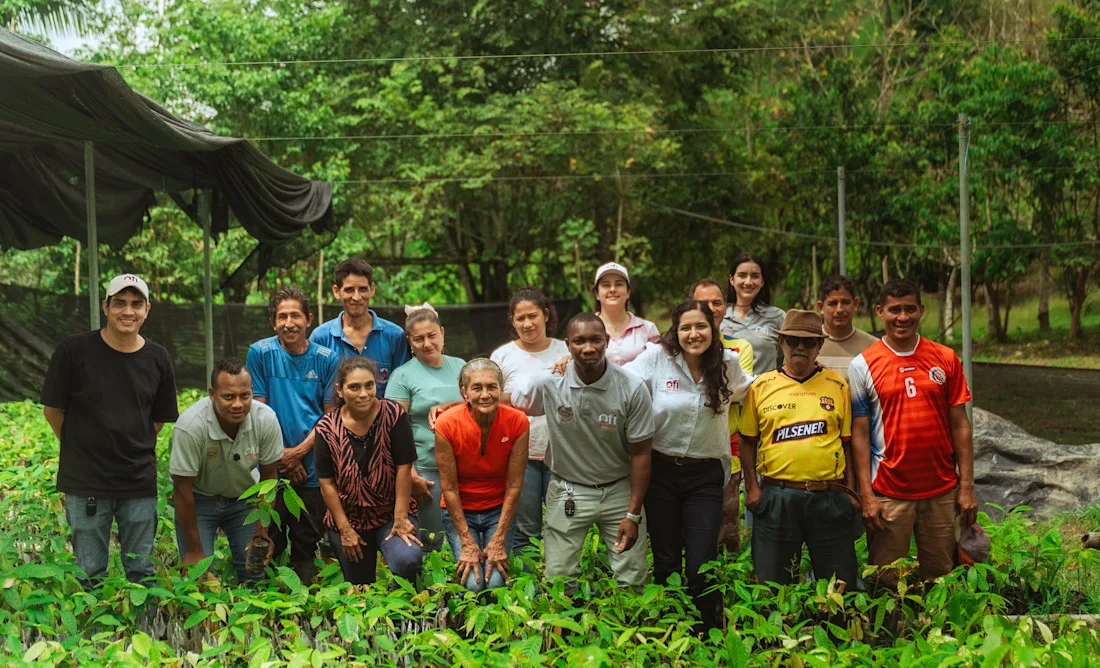
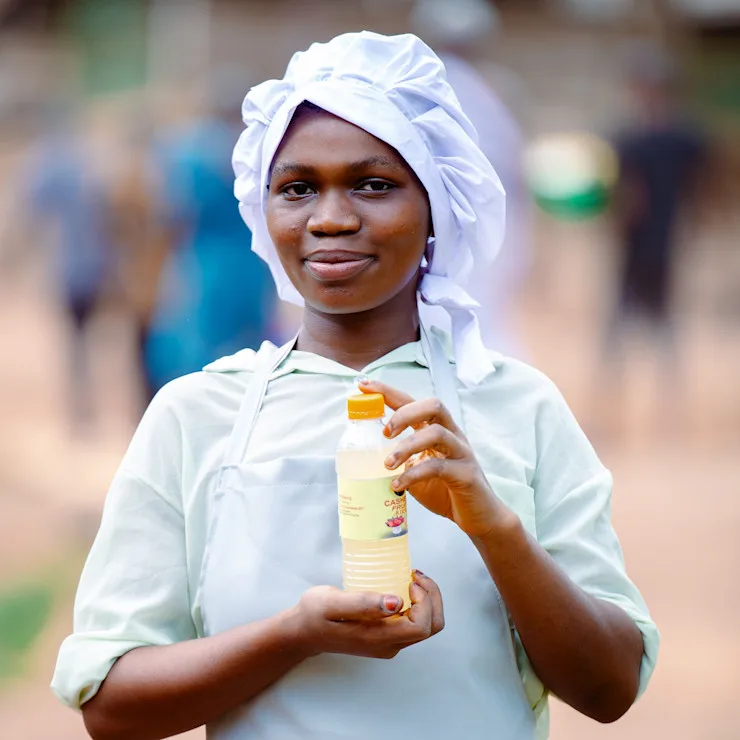
Together, we’re investing €10 million in 12 programs to support 83,000 smallholder farmers - including 28,000 women - to build stronger livelihoods and take part in more resilient, compliant, higher-value supply chains.
And while no two partnerships are identical, I believe there are five lessons that can serve any organization serious about empowering women farmers at scale.
1. Anchor the partnership in a shared problem you’re both motivated to solve
At the outset, both of our organizations recognized something fundamental. Gender inequality is more than a social concern; it’s a structural weakness in agricultural supply chains. When women lack access to land, training, finance, or climate smart resources, whole communities and sourcing networks lose productivity, resilience, and future competitiveness.
The UN estimates that if women smallholders had equal access to resources with men, production would rise by 20-30% per cent, feeding an extra 100–150 million people and reducing carbon dioxide emissions by 2.1 gigatons through improved farm practices by 2050i.
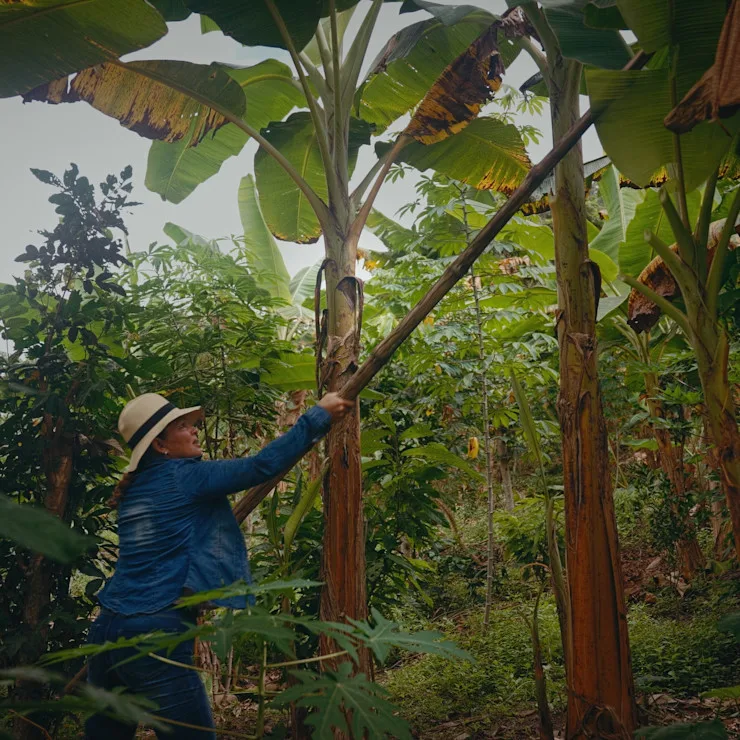
Our own experience echoes the numbers. Women coffee farmers for example, often perform specialized care-taking tasks on farms like soil and water management, pest control, and processing, making them particularly well placed to adopt new climate-smart technologies and practices at scale. But they still lack the resources and decision-making power needed to succeed.
This shared understanding became the foundation for one of our largest and most ambitious public private partnerships to date. With GIZ, we’re strengthening extension services, infrastructure, certification, and targeted training for smallholders with a goal to uplift 28,000 women in ofi’s black pepper, cashew, cocoa, coffee, and hazelnut supply chains.
The partnership also advances ofi’s wider ambition - aligned with FAO’s Commit to Grow Equality (CGE) initiative - to support 250,000 women farmers to improve their livelihoods by 2030 under our Choices for Change strategy.
My advice: Start with the problem, not the activities, and make sure it matters to both sides commercially, socially, and strategically.
2. Design around complementary strengths
Partnerships thrive when each organization brings something distinct to the table.
In this case, GIZ contributes technical expertise and decades of experience promoting sustainable and inclusive development in rural communities worldwide. ofi brings a global sourcing network, local presence, and trust in farming communities to build programs with real-world viability. On the ground, both organizations play an active implementation role, each leading where we have the deepest reach.
Strong communities depend on support systems for health, nutrition, education, youth empowerment, and social protection - areas beyond ofi's core strengths. Which is why we seek partners who bring the deep social-sector expertise our field delivery model is not designed to deliver.
Our HEART Türkiye partnership with GIZ and local NGO Health Right Association shows how complementary strengths can close critical gaps. ofi sources hazelnuts from Türkiye’s Black Sea region, where seasonal migrant women workers spend up to nine months moving between crops. While ofi has worked for many years to improve temporary living conditions with mobile toilets, showers, and hygiene facilities, women still lack preventive care and health information during their migration. Through a 15-month program, partners will reach about 5,000 women with reproductive health education, screenings, culturally tailored resources, and a portable health and nutrition handbook.
"Through our collaboration with ofi, we bring together complementary expertise to strengthen women’s economic participation in agricultural supply chains. By combining GIZ’s development knowledge and local presence with ofi’s market access and sourcing networks, we scale practical solutions that empower women farmers and reinforce resilient communities."

Birte Jaster
Key Account Manager at GIZ
My advice: Be honest about what you’re good at and what you’re not. Build your partnership model so each actor leads where they have reach, influence, and expertise.
3. Co-create solutions that tackle root causes, not just symptoms
The constraints women face aren’t ‘women’s problems’; they’re systemic barriers that disproportionately affect women. That’s why our program design pairs training sessions with community‑level interventions that aim to influence household decision‑making, shift social norms, and strengthen male allyship.
Across our 12 programs, three priorities stand out:
Effective programs are also designed with local needs in mind. Our field teams see the challenges women face and co create solutions with them, not for them. Place women farmers at the centre of your design process to co-create solutions that are culturally aligned, technically viable, and scalable.
My advice: Training matters, but to generate lasting impact, partnerships must target the systems that hold women back, not just the challenges those systems create.
4. Scalability depends on long-term, multi-stakeholder commitment
Impact at scale requires long-term vision, consistent funding, and strong operational partnerships. Our 12 programs span nine regions over 2-4 years, bringing in private sector allies, NGOs, farmer organizations, local institutions, and global partners. They each strengthen different parts of the value chain to expand the scope of impact and prioritize commercial viability.
“Strategic alliances between public and private sectors are crucial for developing and implementing strategies that help farmers adapt to climate crisis. GIZ is joining forces with ofi in Ecuador, leveraging their existing relationships with cocoa farmers, and digital tools to improve productivity more sustainably, increase incomes while meeting social and environmental criteria, such as reducing carbon emissions.”

Ralf Buss
Project Manager, AgriChains Ecuador, GIZ
My advice: Treat your partnership as a platform and create space for others to join.
5. Measure, demonstrate and communicate impact
This is one of the most important yet often under prioritized elements of any partnership. Credible numbers, such as 132,000 women in ofi supply chains supported through programs in 2025, demonstrates progress and helps mobilize new partners. But meaningful reporting must go further.
For our programs with GIZ, reporting typically includes six-month or annual progress updates and a final project report with country-level insights feeding into broader global indicators. This creates a balanced picture of quantitative results and qualitative lessons.
Over time, I want us to improve how ofi’s origin teams set reporting expectations with partners, integrate communications needs, and surface more human stories to bring the quantitative data to life.
But for now, there are several key practices based on my experience that can consistently strengthen reporting:
Align early on what success looks like with co defined KPIs and intended outcomes
Co-create a simple, shared reporting framework to keep teams aligned and make data comparable across regions
Pair data with lived experience to show both scale and purpose
Tailor insights to the needs of different stakeholders to improve clarity and relevance
Be transparent with farmers and communities about the use of their data
Share challenges as openly as achievements to drive improvement and credibility
Treat reporting as a learning engine, not a compliance exercise with reflection moments like quarterly reviews, learning sessions, and field team check-ins
My advice: Communicate outcomes clearly and compellingly to give your partnership momentum.
A call to action for the Year of the Woman Farmer
In every region where we work, I’ve seen the same truth. When women farmers have greater economic agency, entire communities tend to become more resilient and supply chains more dependable. Partnering to empower women farmers is therefore a strategic investment.
Let’s make this year a turning point. We’re inviting donors, companies, investors, and implementing partners to work alongside ofi to co-design, co-finance, and scale proven models.
Together, we can accelerate inclusive growth and build more resilient, climate-smart, and commercially viable supply chains. The question isn’t whether investing in women is worth it. It is whether the sector will build the partnerships required to capture the opportunity.
Notes to Editors
i UNDP: What does gender equality have to do with climate change?