Finding value in crop waste through innovative upcycling
Across ofi’s global supply chains, on-farm waste remains a major driver of agricultural emissions, especially in perennial crops such as coffee and cocoa.
In 2025, ofi expanded practical, farmer-centred innovations designed to turn crop residues into sources of carbon reduction, soil regeneration and economic benefits.
Converting coffee crop residues into sources of carbon reductions and soil regeneration
On ofi’s coffee estates in Zambia, our agronomists run controlled biochar trials in both young and mature coffee fields with the aim of assessing the potential for transforming coffee pulp, parchment and tree cuttings into soil-applied biochar. Early results in young coffee fields indicate a significant positive impact on coffee plant growth. Meanwhile, GHG measurements on soils from mature coffee fields suggest strong carbon reduction potential and reduced nitrogen-fertiliser needs.
In Ayarza, Guatemala, our novel aerated static composting system converts fresh coffee pulp into high-quality compost within six to nine weeks, reducing methane emissions from pulp heaps and delivering an estimated 20-30% total footprint reduction from pulped coffees. Most farmers leave coffee pulp on heaps for four to eight months before spreading it back into the coffee field.
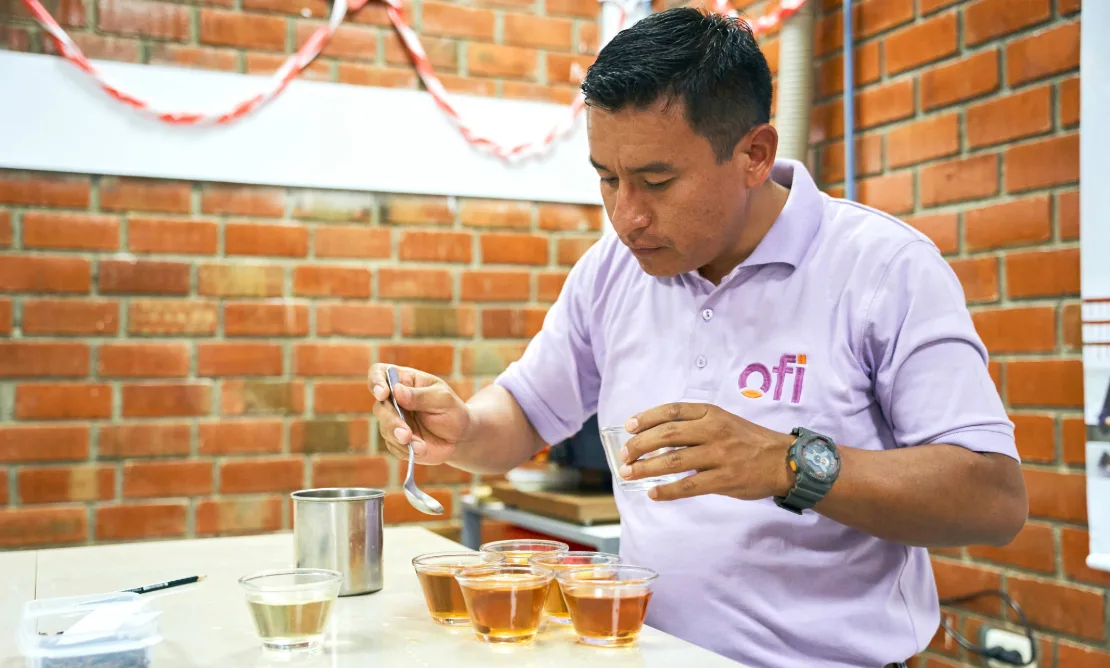
Co-creating on-trend flavors from Upcycled-certified cascara
In six origins, ofi teams are working with coffee farmers to rescue discarded coffee fruit (cascara) and upcycle it through our R&D teams into Upcycled Certified KOFEFRUT - a convenient, ready to use soluble extract powder that retains the beneficial components of coffee and introduces a distinctive new flavour for food and beverage applications. The result is shared economic and ecological benefit
25% additional revenue for coffee farmers from cascara sales*
10% reduction in greenhouse gas emissions by diverting cascara from waste*
68% of US consumers said they ‘would’ or ‘definitely would’ buy upcycled foods*
Exploring the regenerative potential of cocoa pods
In 2025, we began embedding waste upcycling approaches into training curricula for farmers in West Africa, with trials showing that spreading cocoa pod husks back onto fields amongst the trees can increase yields by around 20%. This simple practice also generates ecological co-benefits by nutrient recycling and reducing Scope 3 emissions. Alongside field trials, we continue to work with customers and academic partners to refine methodologies and performance indicators that support credible claims on waste-derived carbon reductions and agronomic efficiency improvements. These insights are being gradually integrated into farmer training modules across origins.
*Precedence Research: Upcycled Food Products Market Size Worth USD 124.39 Billion by 2034
%
additional revenue for coffee farmers from cascara sales*
%
reduction in greenhouse gas emissions by diverting cascara from waste*
%
of US consumers said they ‘would’ or ‘definitely would’ buy upcycled foods*