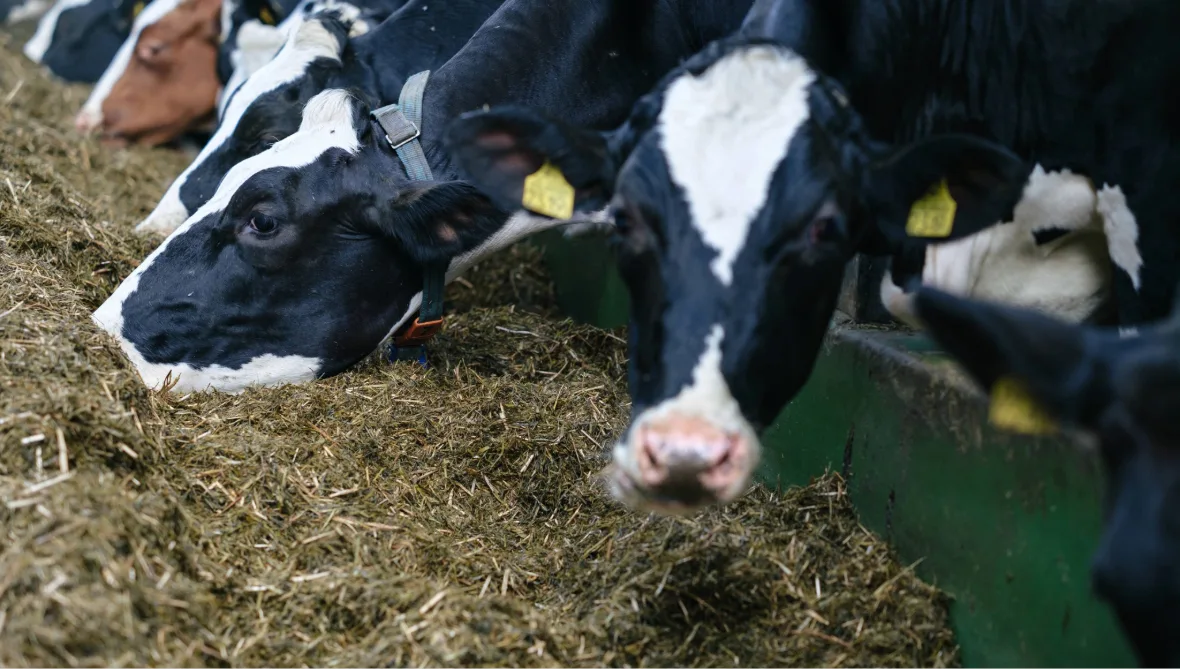
Lowering dairy-farm emissions through natural feed supplements
On dairy farms, enteric methane from cows is a significant contributor to the overall carbon footprint. These emissions occur naturally during rumen fermentation, when microorganisms break down feed and release methane as a by‑product.
ofi’s feed supplement programme provides farmers in our New Zealand and Poland supply chains with a natural feed additive that helps reduce these emissions at the source. The supplement works by influencing the rumen’s microbial population, inhibiting methane‑producing microorganisms. As a result, the amount of methane emitted per cow is reduced, while feed conversion efficiency improves, offering both environmental and productivity benefits for participating farmers.
For positive results, the supplement must be fed consistently throughout the year to every cow across the herd. We have developed a robust monitoring and management system that tracks the full lifecycle of supplement use – from shipping and on‑farm mixing to daily feeding practices. This system enables ofi to quantify greenhouse gas reductions with confidence, following a Gold Standard methodology validated by SustainCERT, an independent verification body.
By 2030, the program is expected to reduce enteric methane emissions by approximately 127,300 tCO2e, covering more than two million metric tonnes of milk. Customers can purchase products with linked, verified carbon reductions, providing clear evidence of climate impact within their supply chains.