Strengthening child protection committees in cocoa communities
ofi works in partnership with the International Cocoa Initiative (ICI) in Ghana, Cameroon, Nigeria, Uganda and Côte d’Ivoire, to create Community Child Protection Committees (CCPCs). Through these Communities, we aim to raise awareness of the risks of child labour and implement remediation actions where cases are identified.
Each CCPC is made up of influential community members such as traditional leaders, schoolteachers, Assembly members, Unit Committee members, youth leaders and women representatives. The CCPCs are supported by District Child Protection Committees (DCPCs), a local government structure, that provides training on how to identify child labor and the process to refer cases to the appropriate government agency. The CCPCs are also equipped with the necessary skills to collect, record and analyze data to inform future actions.
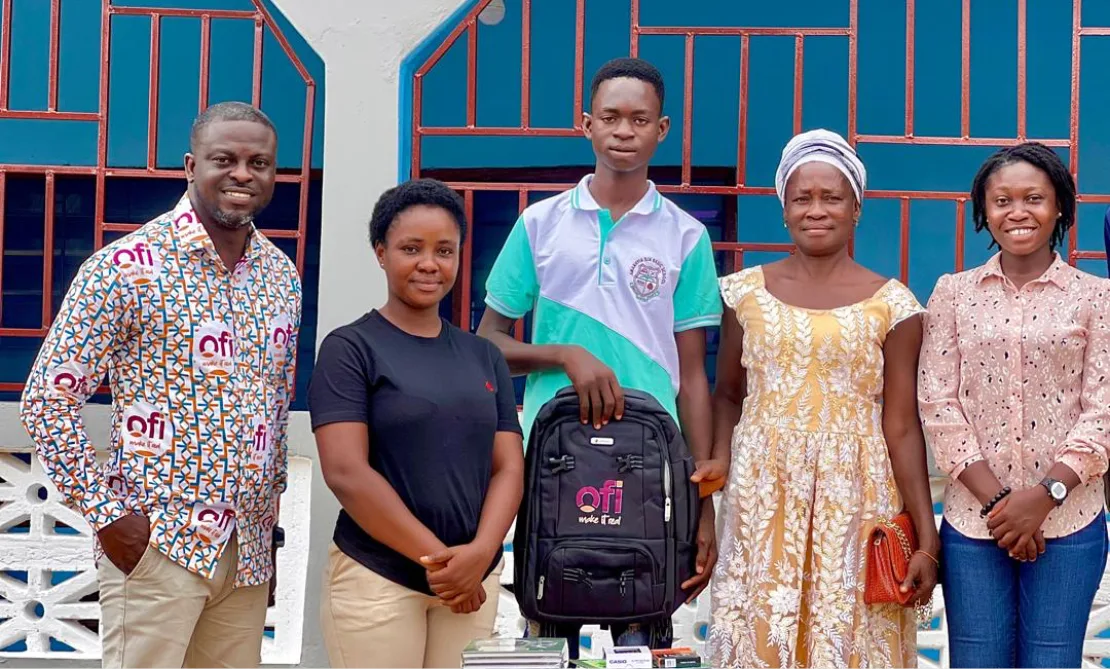
In 2025, we established 27 CCPCs in our sustainability programs in partnership with Lindt in Ghana’s Assin Foso and Nkawkaw districts, resulting in sensitization for the 1,025 children identified at risk of child labor. Remediation actions were based on a needs assessment of these children, and included school materials, and health support.
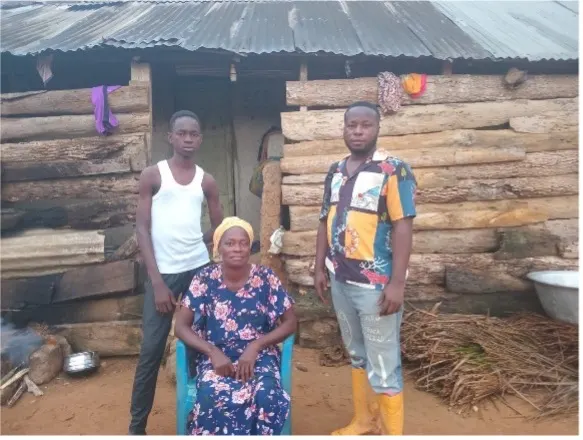
Fredrick Opare Budu, aged 16, from Twifo Praso participated in educational sessions led by the ofi team. These sessions emphasized the value of completing his studies, guiding him to prioritize education over working on the farm with his mother, Joyce Aidoo, a single parent and cocoa farmer as the family's sole breadwinner.
From left: Fred with his mother and ofi field officer Joshua Sarfo, Twifo Praso, Ghana
The effectiveness of the CCPCs is measured by the number of identified and remediated cases of child labor. Additionally, with support from local partners, CCPCs receive specialist health and nutrition training, including guidance on cultivating nutritious, locally grown vegetables such as tomatoes, aubergine, pepper and cocoyam leaves. This empowers families to become more self-sufficient, allowing money that would otherwise be spent at the market to be redirected towards essential needs like their children’s education.